
When someone we love passes away, there are many decisions that need to be made quickly.
Among these, one question may seem very simple, but it often touches on something very personal: Do you want a religious ceremony or a secular one?
For some families, the answer is obvious. Faith played an important role in the life of the deceased, and religious rites are a natural part of the tribute.
For others, it’s less clear.
Is it possible to organize a beautiful ceremony without a religious element?
Is it possible to include a prayer in a ceremony that is otherwise very personal?
What if not all members of the same family share the same beliefs?
Yes, there are several possibilities.
A funeral doesn’t have to fit neatly into a box.
The most important thing is to respect, as much as possible, the wishes and beliefs of the deceased, while creating a meaningful experience for those who come to say goodbye.
What is a religious funeral service?
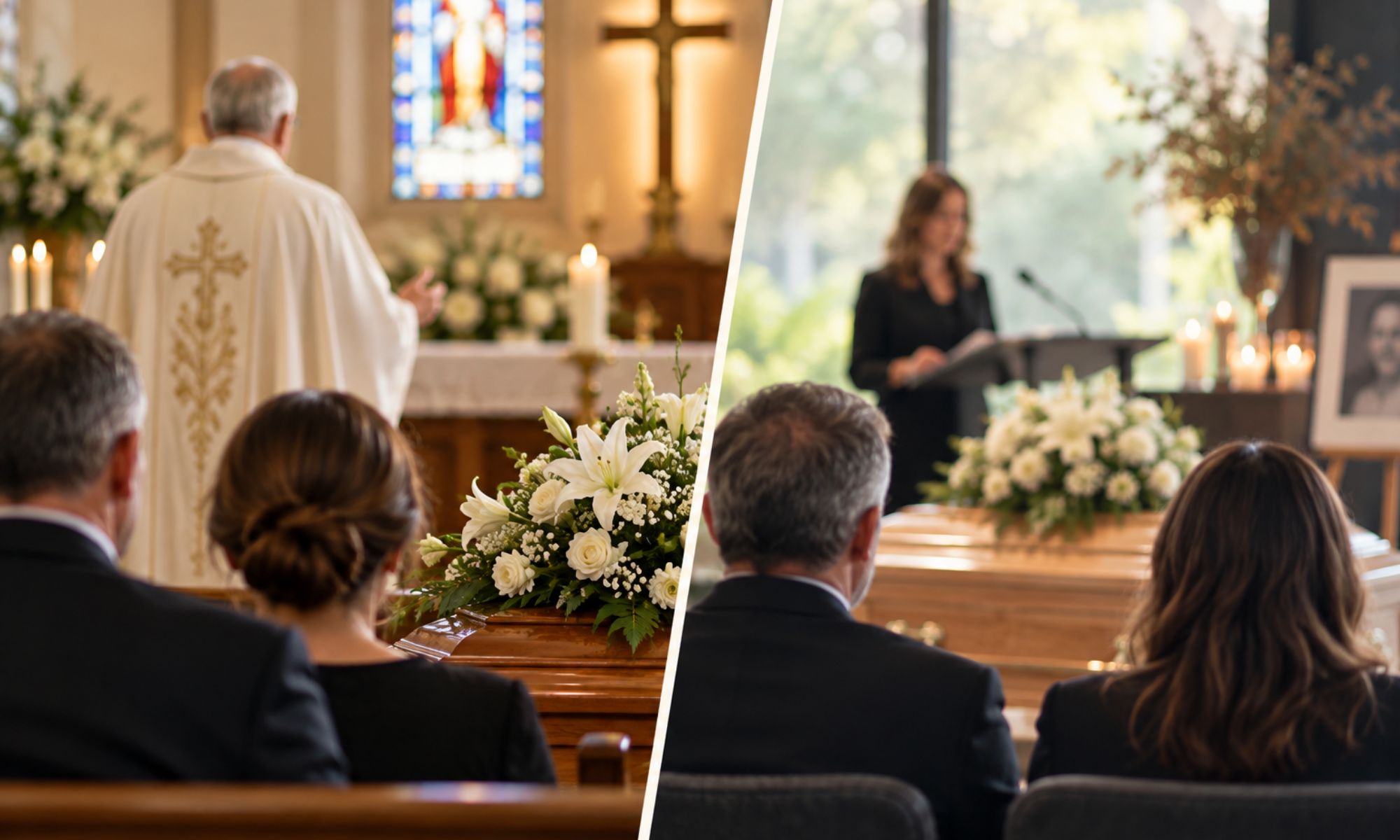
A religious ceremony is part of a religion’s beliefs, rites, and traditions.
Depending on the religious denomination of the deceased, the service may include prayers, readings from sacred texts, hymns, blessings, or various symbolic gestures.
It can be held in a church or another place of worship and led by a priest, pastor, or other religious leader, depending on the tradition in question.
For a person of faith, these rituals can have deep meaning.
They are not merely a reminder of the life that has just ended. They can also express a view of death, spirituality, and the afterlife, depending on each person’s beliefs.
The religious ceremony also provides a setting that many families are already familiar with.
The words and gestures passed down through tradition can serve as guiding points at a time when, in fact, it is sometimes difficult to find one’s own words.
Can a religious ceremony be personalized?
Of course.
Choosing a religious ceremony does not necessarily mean giving up elements that reflect the personality of the deceased.
Depending on religious tradition and what it allows, the family can discuss options for incorporating certain personal elements: appropriate musical pieces, readings, prayers, testimonials, or special memories.
Personalization is then carried out within the framework of the religious rite.
This is an important distinction. A ceremony can be both traditional and deeply personal.
A meaningful song before or after the service, photographs displayed during the gathering, a few words spoken by a grandchild… sometimes, these small details are all it takes to make the tribute truly reflect who the person was.
What is a non-religious ceremony?
A secular ceremony is a funeral service that is not based on a religious rite.
It may be suitable for someone who was not religious, who was no longer practicing a religion, or who simply wanted a memorial that focused more on their life, their values, and the people around them.
But “secular” certainly does not mean cold, impersonal, or devoid of symbols.
Quite the contrary.
A secular ceremony may include music, personal tributes, a eulogy, photographs, videos, readings, a moment of silence, or various symbolic gestures.
You can light a candle. You can play a song that was part of the important moments in their life.
Ask your grandchildren to lay a flower. Tell that famous fishing story that the whole family already knows… but that everyone wants to hear one last time.
The structure is generally more flexible and can be built around what truly represented the person.
Religious or secular ceremony: What is the main difference?
The difference lies mainly in the context that gives meaning to the ceremony.
In a religious ceremony, paying tribute is part of a spiritual tradition and the rites associated with a faith.
The process is therefore generally guided, at least in part, by this tradition.
In a non-religious ceremony, the family usually has more freedom to structure the proceedings around the life, values, relationships, and personality of the deceased.
However, this is not a matter of a ceremony that is “more beautiful,” “more human,” or “more meaningful.”
Both can be.
It all depends on the person you want to honor.
Can religious and secular elements be combined?
For some families, that is exactly what seems most natural.
A person may still hold on to certain religious traditions without being religious. A family may also include people with very different beliefs.
Depending on the context and the specific rituals involved, it is possible to envision a tribute in which certain spiritual aspects are combined with much more personal elements.
A prayer may be followed by a testimony. A spiritual reading may be paired with a popular song that the person particularly loved.
A moment of silence can allow everyone to reflect according to their own beliefs.
The important thing is not to include a religious gesture simply “because that’s what people do,” nor to automatically rule it out just because the ceremony is primarily personalized.
The real question is: Did this act have meaning for that person and their family?
Our article on funeral rites around the world also offers a glimpse into different traditions and ways of honoring the deceased.
Some families want a very personalized celebration of life; others find greater meaning in simplicity.
A ceremony doesn’t have to be impressive.
It just has to be meaningful.
How do you choose between a religious ceremony and a secular ceremony?
When no clear wishes have been expressed, the family can start by asking themselves a few simple questions.
What role did religion or spirituality play in his life?
Did she still take part in certain celebrations?
Had she ever talked about her funeral?
Were there any traditions that were particularly important to her?
On the other hand, would she have preferred that we focus mainly on her family, her passions, her life story, and the legacy she left behind?
We must also think about our loved ones.
That doesn’t mean the ceremony has to cater to everyone’s individual preferences—that would sometimes be impossible.
But understanding what brings the family together can help create a moment where everyone feels included.
And if you’re still unsure, you can talk it over.
You don’t need to have all the answers right away when you first meet with the funeral home.
And where will the ceremony be held?
The type of ceremony sometimes influences the choice of venue, though it does not necessarily determine it entirely.
A religious ceremony can take place in a church or another place of worship. Depending on the circumstances, certain rites may also be performed elsewhere.
A non-religious ceremony generally offers a great deal of flexibility in terms of location.
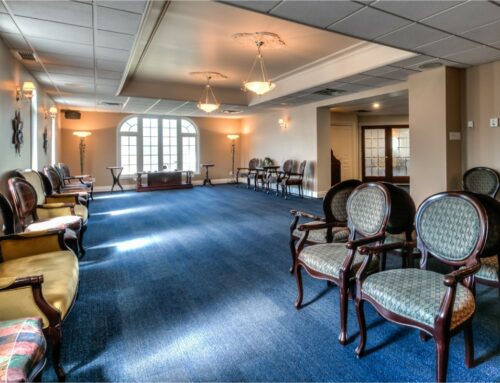
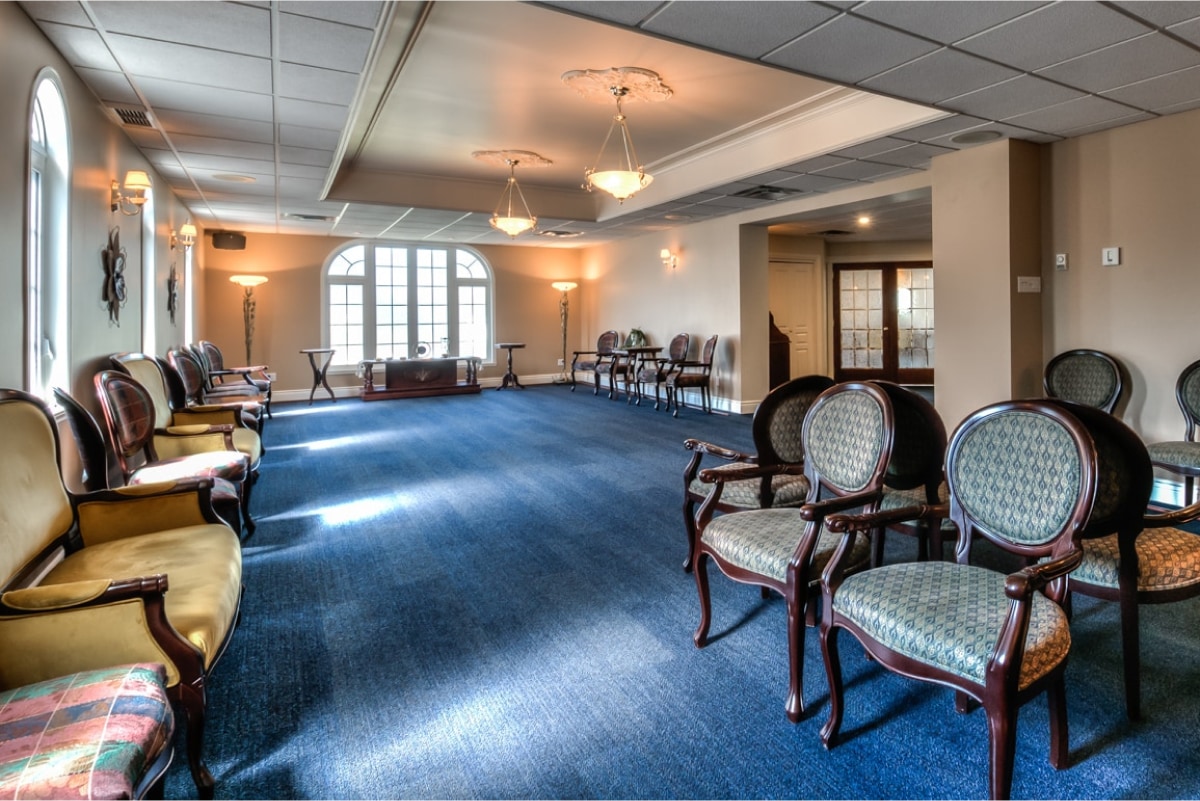
At Marie-Soleil Phaneuf Funeral Home, our spacious exhibition hall can be set up to host a ceremony or a moment of reflection.
It can also be converted into a chapel.
But the tribute can also, when circumstances allow, extend beyond the walls of the residence.
A family may wish to gather at a place that the person was particularly fond of: a golf course, a backyard, a cabin, or another place filled with memories.
The place itself then becomes part of the story being told.
Personalization has a place in both types of ceremonies
Whether religious or secular, a ceremony can, above all, be a way to honor a life.
A favorite photograph. A song. A few items related to a passion. A video montage. A special flower. A testimonial from a longtime friend.
These elements reveal, behind the ceremony, something very simple: the person as their loved ones knew them.
Memorial items can also reinforce this personal aspect and allow the family to keep a meaningful memento after the funeral.
You don’t have to do much.
Often, two or three carefully chosen elements speak louder than a ceremony filled with symbols that don’t really reflect the person.
Can you let them know your choice in advance?
Yes, and this consideration can be part of the decisions made when making advance funeral arrangements.
In particular, a person can express their preferences regarding the type of ceremony they wish to have: religious, secular, or a combination of elements from both approaches.
They can also specify a piece of music, a text, a location, or a tradition that is important to them.
These wishes provide guidance to loved ones when the time comes to organize the memorial service.
And sometimes, a simple phrase—“I’d like this song to be played”—can become extremely meaningful later on.
A ceremony that, above all, respects the individual
You don’t have to find the perfect song.
You don’t have to write the perfect speech either.
A few familiar notes, a true story, a few words spoken with sincerity… it’s often these simple choices that give a ceremony its true depth.
At Marie-Soleil Phaneuf Funeral Home, we take the time to listen to you and help you create a tribute where music, words, and memories naturally come together.
Feel free to contact us to discuss your ideas or simply to learn about the options available to your family.
Because certain songs and certain words stay with us for a long time—much like the people they remind us of.